Books and Bow Back to School Embroidery
A Designer’s First Look: Whimsy with Purpose
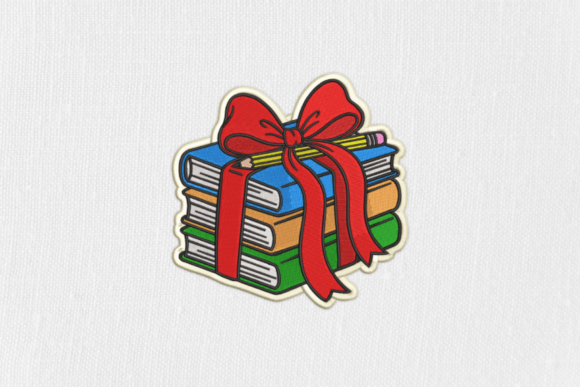
When I opened the Books and Bow Back to School Embroidery file, what struck me wasn’t just the charm—but the quiet intention behind it. This isn’t a cluttered motif or an overdesigned novelty. It’s balanced: two stacked books (one slightly open), a soft ribbon bow looping beside them, and subtle school-themed accents—maybe a tiny pencil tip or chalk-dust texture implied in the fill stitch. The layout feels centered but not rigid; the curves of the bow soften the geometry of the books. It reads as warm, thoughtful, and ageless—not just for kids, but for teachers, grad students, librarians, or anyone who treasures learning as a lifelong rhythm. That mood matters when you’re stitching for real people, not just pixels.
How It Lands on Real Projects
Last week, I stitched the Books and Bow Back to School Embroidery onto a natural linen tote bag for a local teacher boutique. No mockup, no filters—just needle, thread, and fabric. The result? Immediate recognition and a quiet smile from the shop owner: “That’s *exactly* the tone we want—smart but sweet, nostalgic but fresh.” It worked because the design scales well without losing legibility. On the tote, the bow held its shape in satin stitch, the book spines stayed crisp in dense fill, and the overall footprint sat comfortably within a 4x4 hoop—no awkward trimming or re-hooping needed.
I’ve also tested it on a lightweight cotton baby onesie (with tear-away stabilizer) and a midweight French terry sweatshirt (using cutaway + topping). On the onesie, the stitch density felt generous but not overwhelming—no puckering, no stiffness. On the sweatshirt, the bow’s curves translated beautifully, and the books retained clean edges thanks to thoughtful underlay. As a machine embroidery design, it behaves like a seasoned collaborator: predictable, respectful of fabric limits, and visually confident without shouting.
Where It Shines—and Where to Pause
The Books and Bow Back to School Embroidery is especially strong for personalized gifts and small-batch merchandise: embroidered pillow covers for nursery decor, tea towels for back-to-school teacher appreciation, or custom caps for graduation cohorts. Its visual clarity holds up in printable mockups and digital embroidery file previews—critical if you’re listing on Etsy or building a craft business catalog. Customers consistently respond to its sincerity; it doesn’t feel mass-produced, even as a digital embroidery file.
That said, proceed thoughtfully on stretchy knits or ultra-thin voile. The bow’s satin-stitched loops can distort if stabilizer isn’t precisely matched to fabric weight. On dark fabrics, check thread color contrast early—some light-toned fills may need a white underlay boost. And while the design avoids micro-detailing (no tiny serif fonts or fragile stems), avoid shrinking it below 3 inches wide: the bow’s knot and book spine lines begin to compress, risking loss of definition. For curved surfaces like caps, test placement first—the top curve of the bow should follow the dome naturally, not fight it.
What It Adds to Your Finished Product
This isn’t just decoration. The Books and Bow Back to School Embroidery elevates perceived value. A plain cotton apron becomes a boutique-ready gift. A generic sweatshirt gains personality and purpose. Because the theme resonates across generations—students, educators, lifelong learners—it builds instant emotional connection. That translates directly to buyer engagement: higher cart conversion on Etsy, repeat requests from local shops, stronger brand consistency for handmade product lines.
It also supports professionalism quietly. Clean stitch paths, logical jump-thread placement, and balanced density mean less editing before production. No surprise thread breaks, no re-hooping mid-design. That reliability saves time—and time is your most valuable design asset.
Practical Notes Every Embroiderer Should Check
- Always test the Books and Bow Back to School Embroidery on scrap fabric matching your final project’s weight and stretch.
- Review stitch density in your embroidery software—look for any unusually tight fill areas that could cause stiffness or fabric distortion.
- Confirm hoop size compatibility before digitizing or resizing; this design works best in standard 4x4 or 5x7 hoops.
- Inspect small details at actual stitch-out size—not just on screen. Does the bow’s center knot read clearly? Do book edges stay sharp?
- Test black-and-white mockups to assess contrast on light and dark backgrounds—especially important for commercial embroidery or wholesale orders.
- Match stabilizer to fabric: cutaway for knits, tear-away for stable wovens, and light topping for textured surfaces like terry cloth.
- Verify licensing terms before selling finished items or bundling the digital embroidery file—commercial use isn’t automatic unless explicitly granted.
Final Thought: A Design That Serves the Maker
The Books and Bow Back to School Embroidery doesn’t ask you to work around it. It invites collaboration. It’s the kind of embroidery file that makes your tote bag design feel intentional, your baby embroidery feel tender, your holiday embroidery feel meaningful—not just seasonal. In a market flooded with rushed, trend-chasing motifs, this one breathes. It’s got structure, soul, and stitch-savvy intelligence. Whether you’re prepping for craft fair season, building an Etsy seller portfolio, or designing for a local school fundraiser, it earns its place in your embroidery project queue—not as filler, but as foundation.