Daisy Floral Pencil Teacher
A Thoughtful First Impression for Boutique Apparel Designers
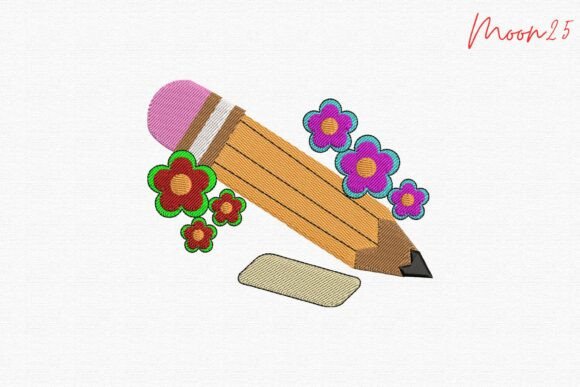
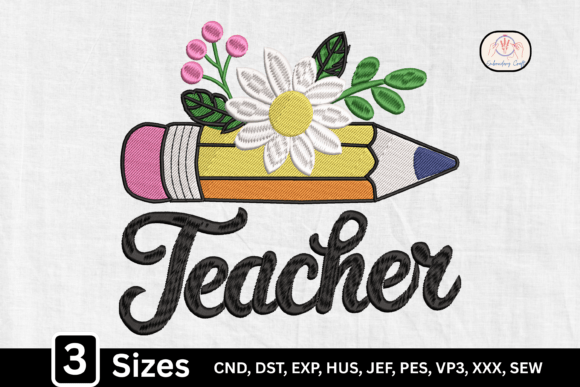
As an embroidery designer who’s developed over 200+ collections for small clothing brands and Etsy sellers, I opened Daisy Floral Pencil Teacher with a specific question in mind: does this Creative Fabrica embroidery design carry enough visual weight and personality to elevate a neutral sweatshirt or hoodie—without overwhelming it? The answer is yes—but with nuance. At first glance, it reads as sweet, intentional, and quietly confident: a dainty pencil wrapped in soft daisies and delicate stems, not overly fussy but rich in charm. It leans feminine and playful without feeling juvenile, making it ideal for back-to-school apparel that appeals to teachers, students, and creative professionals alike. The floral pencil motif balances structure (the pencil’s clean lines) with organic flow (petals, leaves, gentle curves), giving it a premium, hand-drawn sensibility—not mass-produced or generic. That subtle distinction matters when building a boutique brand where every stitch contributes to perceived value.
How Daisy Floral Pencil Teacher Performs Across Apparel Types
For sweatshirt embroidery, this design shines on chest placement—especially on heather grey, oatmeal, or light sage hoodies. Its moderate scale fits comfortably within a 4”–5” hoop, avoiding crowding while retaining legibility. On oversized garments, I’d recommend centering it slightly lower than traditional chest placement to anchor the visual weight. As a hoodie design, it works beautifully on the left chest or subtly on the sleeve cuff—just be sure to adjust stabilizer for ribbed fabric stretch. For t-shirt embroidery, pair it with high-quality cotton blends; the fine stem details hold up well if thread tension is calibrated correctly. On denim jackets, it adds a gentle contrast—think indigo with ecru or pale yellow thread—to soften ruggedness without losing character.
For tote bag design and lifestyle merch, Daisy Floral Pencil Teacher scales gracefully upward (within reason). Enlarging beyond 6” risks thinning out petal definition, so always test stitch density before production. As a back design, it reads clearly at ~7”, especially when paired with minimal typography beneath—perfect for boutique merchandise targeting educators or stationery lovers. In printable mockups and social media graphics, its balanced composition translates cleanly to digital formats, helping Etsy sellers maintain visual consistency across listings and Instagram posts.
Where to Use It—and Where to Pause
This isn’t a one-size-fits-all embroidery file. Its charm lies in thoughtful application. Avoid dense placement on heavily textured fleece or thick terry cloth unless you’ve tested stabilizer pairing—lightweight cutaway or tear-away + topping works best. On dark garments, choose thread colors with strong contrast: ivory or pale mint over navy, warm taupe over charcoal. Tiny lettering isn’t present here, so no concerns about legibility loss—but do inspect the pencil tip and smallest daisy centers during your test run. Curved surfaces like sleeve seams or rounded hems require re-hooping precision; consider digitized underlay if your machine supports it.
On stretchy fabric (like lightweight French terry or performance knits), stabilize aggressively—floating stabilizer helps preserve drape while preventing puckering. And while it’s lovely on cozy seasonal outfits (think cable-knit cardigans or flannel-lined hoodies), avoid placing it directly over seams or high-movement zones unless you’ve confirmed stitch integrity through wear-testing.
Design Impact Beyond the Stitch
What makes Daisy Floral Pencil Teacher more than just another School-themed embroidery file? It strengthens brand identity by offering emotional resonance—not just theme alignment. Teachers, creatives, and lifelong learners recognize themselves in its quiet intelligence and warmth. That builds buyer trust: when customers see consistent, well-executed designs like this across your shop, they associate your label with care and intention. Visually, it supports product recognition—repeating it across sweatshirts, totes, and enamel pins creates cohesion without repetition fatigue. In photos, it enhances lifestyle product presentation; the floral pencil motif invites storytelling, whether styled with notebooks, coffee mugs, or sunlit classroom corners.
Practical Notes Every Embroidery Designer Should Confirm
- Test on scrap fabric matching your final garment’s weight and texture—especially for fleece, ribbed knit, or brushed cotton.
- Review stabilizer choice carefully: medium-weight cutaway for stability, lightweight tear-away for softer drape, plus water-soluble topping for crisp petals on darks.
- Confirm thread color contrast early—subtle pastels may disappear on light backgrounds; deepen saturation if needed.
- Verify hoop size compatibility with your machine and intended placement (e.g., chest vs. sleeve).
- Inspect stitch density in petal clusters—overly dense areas can cause fabric distortion on lightweight knits.
- Always test on similar garment fabric before bulk production—mockups don’t replicate real-world tension and movement.
- Compare placement options using printed templates or laser-guided hooping tools for consistency across your small shop product line.
- Double-check Creative Fabrica product details and licensing terms before selling finished apparel—commercial use rights are essential for Etsy sellers and boutique brands.
Final Thoughts for Creative Entrepreneurs
Daisy Floral Pencil Teacher won’t shout—but it will linger. That’s its strength. In a market saturated with loud, trend-chasing designs, this Creative Fabrica embroidery file offers quiet confidence: a handmade product that feels both personal and polished. Whether you’re launching a teacher appreciation capsule, building a back-to-school collection for your small shop product line, or adding refined detail to your commercial embroidery offerings, it delivers versatility without compromise. Just remember: great embroidery starts with intention, not just installation. Let this design earn its place—not because it’s cute, but because it connects, elevates, and endures.