Red Apple Embroidery Design
A Cheerful, Compact Design That Shines on Baby Items and Everyday Goods
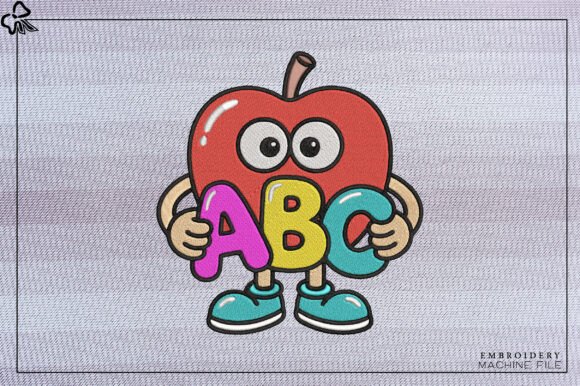
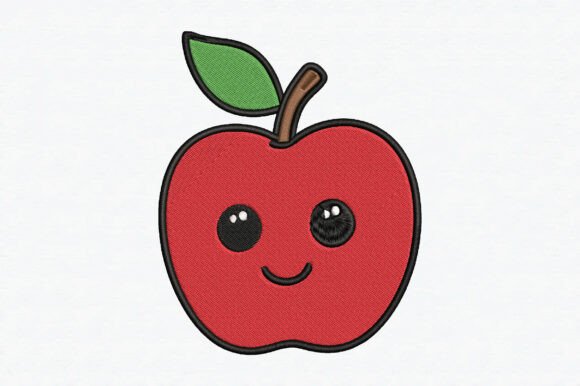
As someone who’s stitched hundreds of machine embroidery designs for clients—nursery decor, boutique apparel, personalized gifts, and Etsy shop inventory—I opened the Red Apple Embroidery Design expecting a simple motif. What I found was more intentional than it first appears: a compact, well-proportioned apple with soft curves, friendly eyes, and a subtle smile that reads clearly even at 2.5 inches tall. It’s not overly detailed, but it’s not flat either—the shading in the fill stitch gives gentle dimension without heavy density. That balance is why it landed on my “test-first-for-baby-gifts” list.
Where It Lives Naturally: Nursery, Kitchen, and Playful Personalization
I recently used the Red Apple Embroidery Design on a set of organic cotton burp cloths for a local baby boutique. Paired with light sage thread on cream fabric, it looked warm, handmade, and quietly sophisticated—not cutesy to the point of clutter. The design scaled beautifully down to 2.2 inches for the corner of a receiving blanket and held up cleanly at 3.8 inches centered on a linen tea towel. It also worked surprisingly well on a lightweight unstructured tote bag: no puckering, no thread breakage, and the satin-stitched leaf stayed crisp thanks to moderate stitch density.
This isn’t a design built for dramatic statement pieces—it’s a quiet connector. It fits effortlessly into nursery themes without leaning into cliché (no oversized letters or nursery rhymes), and it carries just enough personality to feel personal. For Etsy sellers, that means faster buyer recognition and stronger repeat appeal: customers remember the apple, not just the category.
Real-World Stitching Notes You’ll Want Before Hooping
Here’s what I observed stitching across five fabric types:
- On thin cotton (like onesies or handkerchiefs): Use tear-away stabilizer *under* and lightweight cut-away *under*—the smile and stem details hold better when the base doesn’t shift.
- On dark fabric (navy sweatshirts, charcoal towels): Test thread contrast first. Light red or brick-red thread loses warmth on black; a slightly orange-leaning red pops without looking artificial.
- On curved surfaces (caps, bucket hats): Avoid placing the stem directly over seams. The slight curve of the apple’s top works fine, but the stem’s narrow width can distort if hooped tightly over a ridge.
- On textured linen or terry cloth: Add a layer of topping (like water-soluble film) to keep satin stitches from sinking into the nap—especially important for the leaf and cheek highlights.
Where to Pause—and Why
The Red Apple Embroidery Design isn’t ideal for every application. I wouldn’t recommend it for:
- Sub-2-inch hoop sizes without confirming detail retention—those eyes are small and rely on clean satin outlines.
- Stretchy knits (like jersey baby bodysuits) unless paired with high-quality cut-away stabilizer and reduced top tension.
- Dense multi-layer garments (e.g., quilted jackets) where the apple’s modest height may get visually swallowed.
- Products meant for daily machine washing *without* proper finishing—stitch density is moderate, but the leaf’s fine lines benefit from secure thread ends and back-trimming.
What It Adds to Your Finished Product—Beyond the Obvious
Stitching this design reminded me how much mood a single motif carries. It doesn’t scream “apple”—it whispers “fresh,” “gentle,” “thoughtful.” That subtlety elevates handmade products: a custom embroidered pillow cover feels like care, not craft supply. For small shop owners, that translates to higher perceived value and fewer “just browsing” interactions. Customers pause longer. They ask about fabric origin. They add matching items to cart.
It also supports brand consistency without demanding full branding suites. Pair it with neutral typography on a printable mockup, and it reads as part of a cohesive collection—even if your shop sells everything from herb sachets to wooden toys. That flexibility is rare in single-motif embroidery files.
Designer-to-Designer Checklist Before You Stitch or Sell
Before using the Red Apple Embroidery Design in client work, production runs, or digital listings, run through these practical checks:
- Test on scrap fabric *in your actual project fabric*, not just quilting cotton.
- Review stitch density in your embroidery software—if fill areas look overly dense or sparse, adjust underlay or density settings before finalizing.
- Confirm hoop size compatibility: does it fit comfortably in your most-used hoop, or will you need re-hooping mid-stitch?
- Inspect tiny corners—the smile’s curve and leaf tip should be smooth, not jagged or pixelated.
- Try a black-and-white mockup: does the shape read clearly without color cues? (It does—this one passes.)
- Compare light and dark backgrounds side-by-side: the design’s contrast ratio holds up, but thread choice changes everything.
- Use appropriate stabilizer—not just “some,” but the right *type* and *layering* for your fabric and end use.
- Verify licensing terms before selling finished items or bundling the Red Apple Embroidery Design as part of a commercial embroidery kit or digital product.
Final Thought: A Small Design With Big Quiet Confidence
The Red Apple Embroidery Design won’t dominate a tradeshow booth or go viral on social media—but it will earn quiet nods from parents folding laundry, smiles from chefs hanging kitchen towels, and repeat orders from boutique buyers who trust consistency over flash. It’s the kind of embroidery file that makes your craft business feel grounded, intentional, and human. If you’re selecting designs for nursery collections, everyday handmade goods, or thoughtful personalized gifts, this one earns its place—not because it’s loud, but because it’s reliably, warmly, well-made.